
The strongest part of the business already existed
Rise & Shine Aircraft Detailing did not begin with a capability problem. It began with a translation problem.
Behind the business was substantial aviation experience, a clear respect for controlled operating environments and a specialist service relevant to aircraft owners, business-aviation operators, charter operators and ground-handling partners. Yet those strengths were not automatically visible to someone encountering the business for the first time.
The strategic task was therefore not to manufacture credibility. It was to make genuine capability legible: to clarify what Rise & Shine should be known for, organise the evidence that supported that position and build a market-facing system capable of carrying it consistently.
This is the distinction at the centre of the engagement. A logo and website were part of the work, but neither was the starting point. The starting point was the business problem those tools needed to solve.
The business context
Rise & Shine is a Saint Lucia-based specialist focused on aircraft surface and cabin care. The business is led by Glyne Collymore, an FAA- and ECCAA-licensed aircraft engineer with more than 36 years of aviation experience. Client-provided records describe experience with LIAT, American Airlines, American Eagle and Airtechs, across regional and international aviation environments.
That background materially changes how the service should be understood. Rise & Shine is not a general cleaning company that happens to work around aircraft. Its relevant point of difference is the combination of detailing capability and aviation-informed judgement in an environment where care, procedure, access, surface protection and professional discipline matter.
The service scope was deliberately defined around interior and exterior aircraft detailing, paint correction, polishing, buffing and deep cleaning carried out with attention to aircraft-manufacturer guidance and operating requirements. Mechanical, structural and certified aircraft-maintenance activities sit outside the detailing offer. That boundary is commercially important because credibility in a specialised category depends as much on what a business does not claim as on what it promotes.
The commercial problem: actual capability and perceived credibility were out of alignment
A prospective buyer cannot inspect an organisation’s internal experience before deciding whether to take the next step. The buyer encounters signals: a name, identity, website, service description, proposal, photograph, email or referral. Those signals form an early judgement about relevance and risk.
For a smaller specialist entering a controlled aviation environment, weak or generic signals create a particular disadvantage. The market may compare the visible presentation of the business with larger or more established providers before discovering the depth of experience behind it. If the brand resembles an ordinary cleaning service, or if the technical credibility is buried inside a long explanation, the buyer must work too hard to understand why the business belongs in the category.
That creates a perceived-credibility gap: the business may be capable of doing the work, but its public system does not yet make that capability easy to assess. The consequence is not merely aesthetic. It can influence whether an enquiry is made, whether a proposal is read with confidence and whether institutional stakeholders can see a disciplined operator rather than an informal service.
What the diagnosis revealed
1. The most credible differentiator was not leading
The founder’s aviation background was the strongest basis for trust, but experience alone was not a position. It needed to be translated into a clear reason that aircraft owners, operators and aviation partners could recognise quickly.
2. The category needed discipline
Rise & Shine needed to look and sound unmistakably like an aviation-focused detailing specialist. Generic cleaning language would understate the operating context; excessive technical language would make the offer harder to understand. The right position had to communicate specialisation without overstating regulatory status or maintenance capability.
3. Different audiences required one coherent proof structure
An aircraft owner may begin with presentation, convenience and care. An operator may look for reliability, process and aircraft-appropriate methods. A ground-handling or institutional stakeholder may need to understand access, safety, scope, risk controls and compliance. The business needed one central story with enough structure to answer each audience’s questions.
4. Isolated deliverables would reproduce the same gap
A new mark without a position would be decoration. A website without a message hierarchy would be a digital service list. A proposal without consistent evidence would make institutional approval harder to evaluate. The parts needed to operate as one system.
The strategic response
GENRO organised the engagement around three connected outcomes: clarity, credibility and commercial leverage.
Clarity: define the business before designing its expression
The first decision was to lead with aviation experience rather than generic cleaning capability. The position framed Rise & Shine as a professional aircraft-detailing service built on aviation experience, safety-conscious methods and disciplined mobile delivery.
The customer-facing promise, ‘First-Flight Ready’, gave the brand a concise organising idea. It speaks to aircraft presentation, preparedness and professional care; it is not a claim of airworthiness or maintenance clearance. That distinction allowed the language to be memorable while respecting the boundary of the detailing service.
GENRO then organised the audiences, service categories, message hierarchy and exclusions so that the business could explain itself consistently. Instead of forcing every visitor through the full technical history, the system leads with the relevant promise and reveals supporting detail where it is needed.
Credibility: turn experience into visible evidence
Credibility was built through evidence architecture rather than visual polish alone. The founder’s licensing and experience, the aviation-specific service boundaries, the controlled operating method, equipment considerations, risk controls and attention to manufacturer guidance were organised into a coherent narrative.
The visual identity, typography, colour system, stationery and digital presentation were developed to support that narrative. The design needed to feel precise, calm and appropriate to aviation—not like a conventional automotive-detailing brand and not like a large airline pretending to be something it was not.
The website then became the public expression of the system. Its role was to make the offer understandable, place the strongest trust signals where decisions are formed and provide a clear route from interest to enquiry. The institutional proposal carried the same logic into a different setting, organising the company profile, operating scope, methodology, safety approach, risk controls and proposed value for airport stakeholders.
Commercial leverage: make the brand useful beyond promotion
A commercially useful brand should reduce the amount of explanation required before a serious conversation can begin. It should help the right people understand the offer, help the business present itself consistently and help decision-makers evaluate the next step with less ambiguity.
For Rise & Shine, this meant building tools for more than visibility. The resulting system supports direct enquiries, service discussions, institutional engagement, consistent follow-up and future growth without requiring the founder to reconstruct the business story for every audience.
What GENRO developed
- A business and brand diagnosis focused on the credibility gap.
- A defined position and customer-facing promise grounded in aviation experience.
- Audience, service and message structures for clearer market understanding.
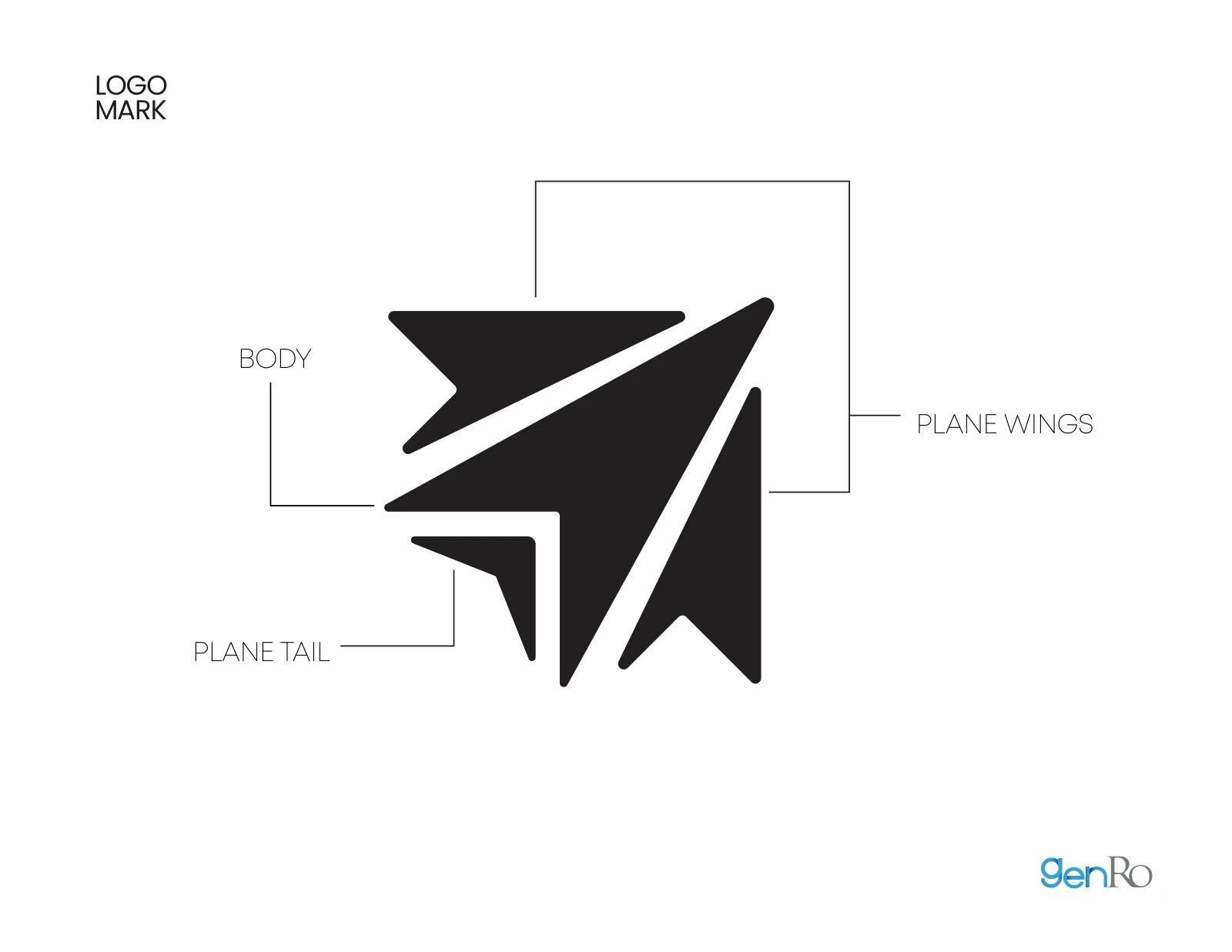
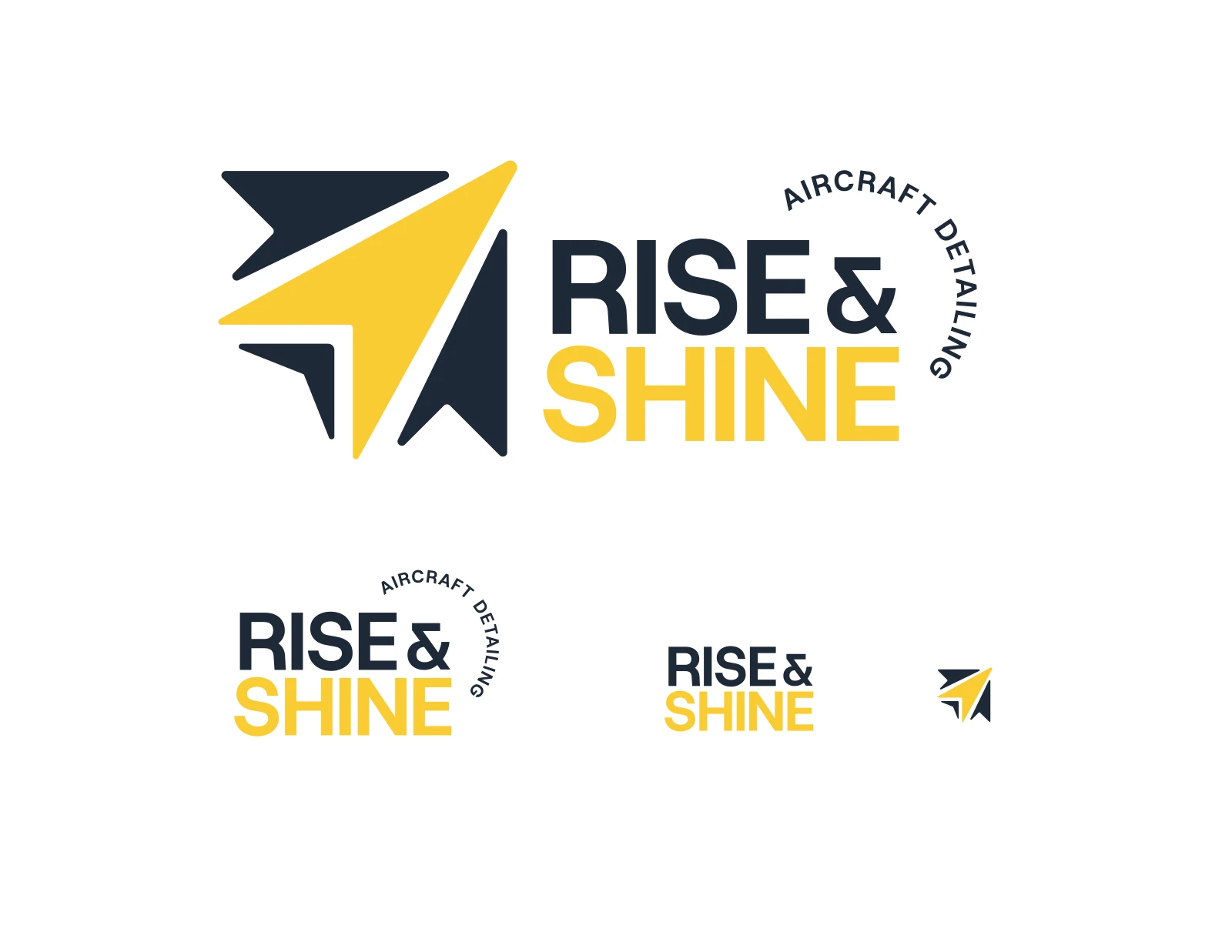
- A coordinated visual identity system, including primary and secondary marks, colour, typography and core applications.
- A website strategy and public digital presence designed around trust, service clarity and enquiry.
- Commercial and institutional communication that organised operating scope, methodology, safety, risk and stakeholder value.
- Clear claim boundaries to avoid confusing detailing with certified maintenance or unconfirmed approval.
- A consistent foundation for future proposals, social communication, service materials and business development.
These were not separate creative exercises. Each element had a defined role in helping the market move from seeing a small service business to understanding a specialist aviation provider.
The resulting system
The engagement produced a coherent market-facing foundation: a clearer category position, a more disciplined service story, an identity suited to the operating environment, a website that makes credibility easier to recognise and proposal material structured for institutional evaluation.
The value of that system is not that every touchpoint looks identical. It is that every touchpoint reaches the same conclusion. Rise & Shine is presented as an aviation-focused aircraft-detailing specialist whose offer is informed by substantial aviation experience and defined by professional boundaries.
That coherence creates the conditions for stronger commercial conversations. It gives prospective clients and stakeholders a clearer basis on which to understand the business, assess relevance and decide whether to engage.
What this case study demonstrates
The Rise & Shine engagement demonstrates why brand development should begin with diagnosis. The visible output may include a logo, website and proposal, but the strategic work sits underneath: category definition, audience priorities, claim discipline, evidence selection, message hierarchy and the connection between presentation and commercial use.
This is especially important for specialist and founder-led businesses. Their strongest advantages often exist in experience, judgement and relationships that the market cannot immediately see. If those advantages remain implicit, the business can be underestimated. If they are organised and expressed responsibly, the brand becomes a credible bridge between what the organisation can do and what an external decision-maker can confidently understand.
A note on evidence and outcomes
This applied case study describes GENRO’s strategic and creative contribution and the resulting communication system. It does not claim a measured increase in revenue, market share, airport approval or procurement success. Licensing, work-history and operating information referenced here is drawn from client-provided project material. Regulatory permissions, insurance and operating approvals remain subject to the relevant third parties.
Final thought
When capability is stronger than the brand, the answer is not simply to make the business look more impressive. The answer is to understand what makes it credible, decide what the market needs to recognise and build a system that carries that truth clearly.
GENRO helps businesses translate genuine capability into clearer positioning, stronger credibility and greater commercial leverage.
Receive occasional GENRO insights
Stay informed
Occasional executive insights
Receive selected GENRO perspectives on positioning, credibility and commercial readiness. Useful, infrequent and easy to leave.